Designing scalable search & filtering for complex, data-rich archives
Simplifying discovery across multiple archival platforms
Project overview
Context
Findmypast operates multiple archival platforms with vast, complex datasets. Discovery experiences were inconsistent, making it difficult for users to explore and refine results effectively.
The Problem
Users struggled to:
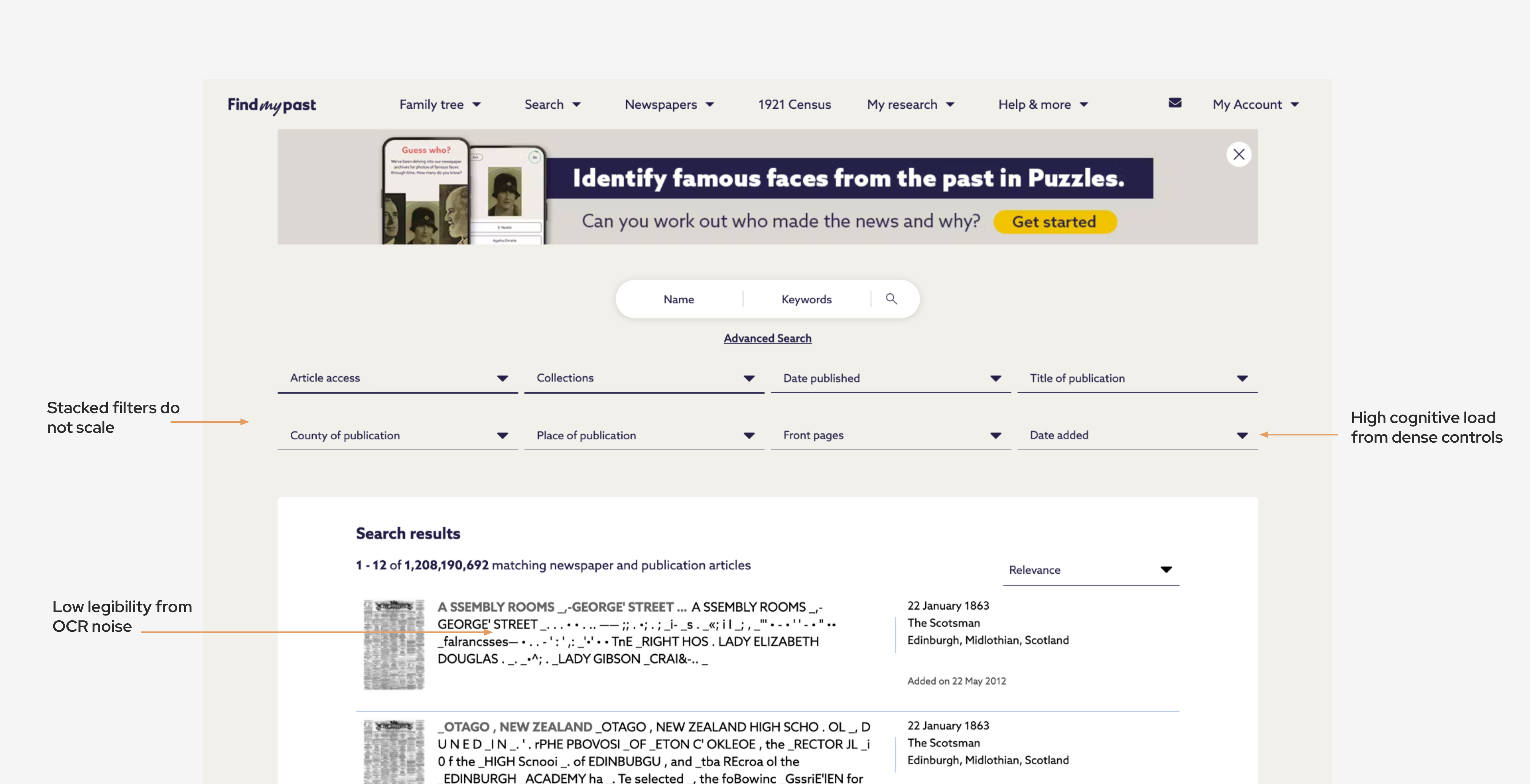
- Refine results efficiently using complex filtering systems
- Understand available options and filter structure
- Explore content without a precise starting point
Objective
- Support both targeted search and exploratory browsing
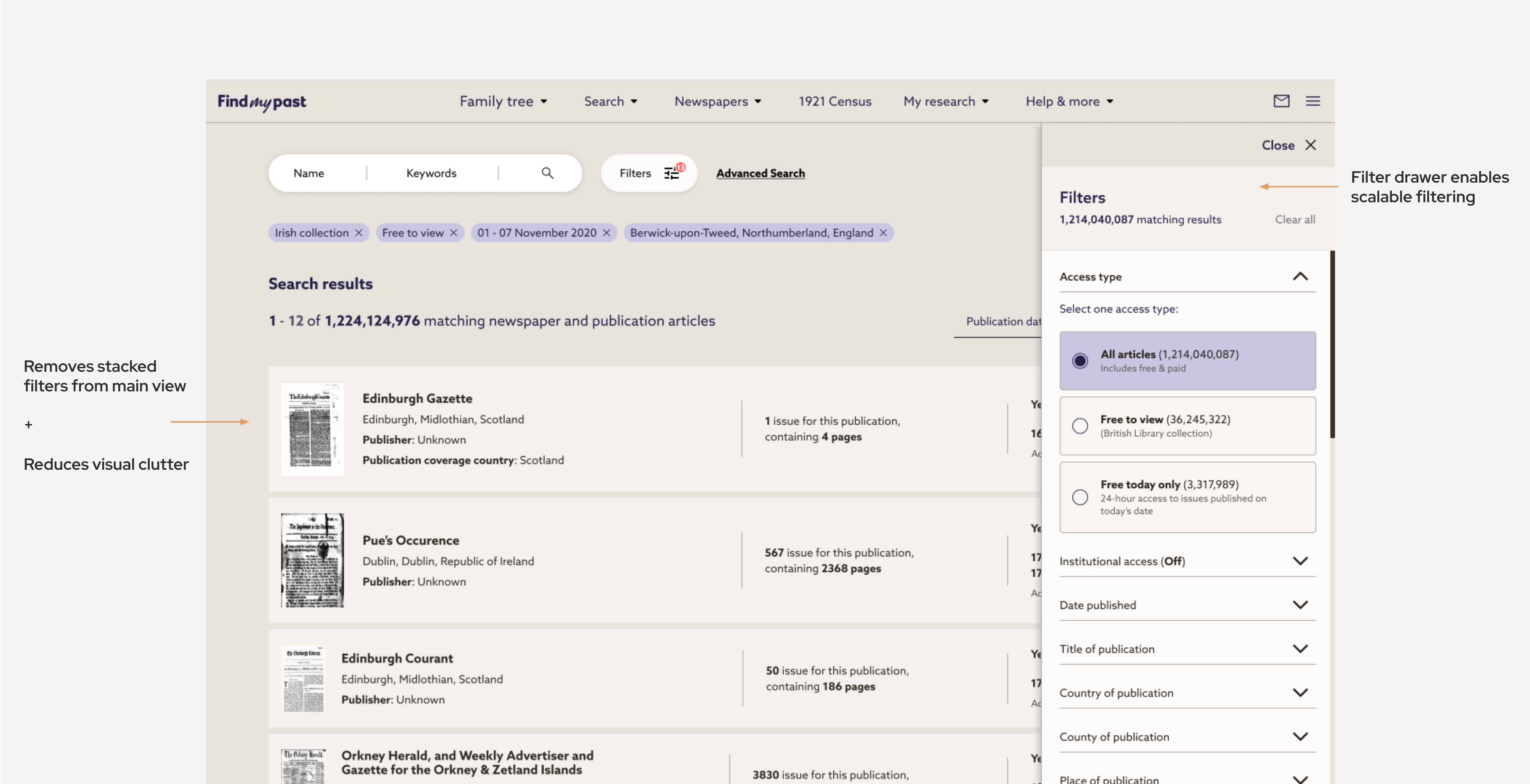
- Simplify and scale complex filtering
- Create a scalable, consistent discovery system
My role
End-to-end product design across search, filtering, and browse — from research and UX strategy to interaction design and delivery.
How I approached the problem
Research and analysis
- Search was dominant, but refinement was inefficient
- Filters were powerful but underutilised
- Browsing behaviours were underserved
- Inconsistent patterns increased cognitive load
Design and feature development
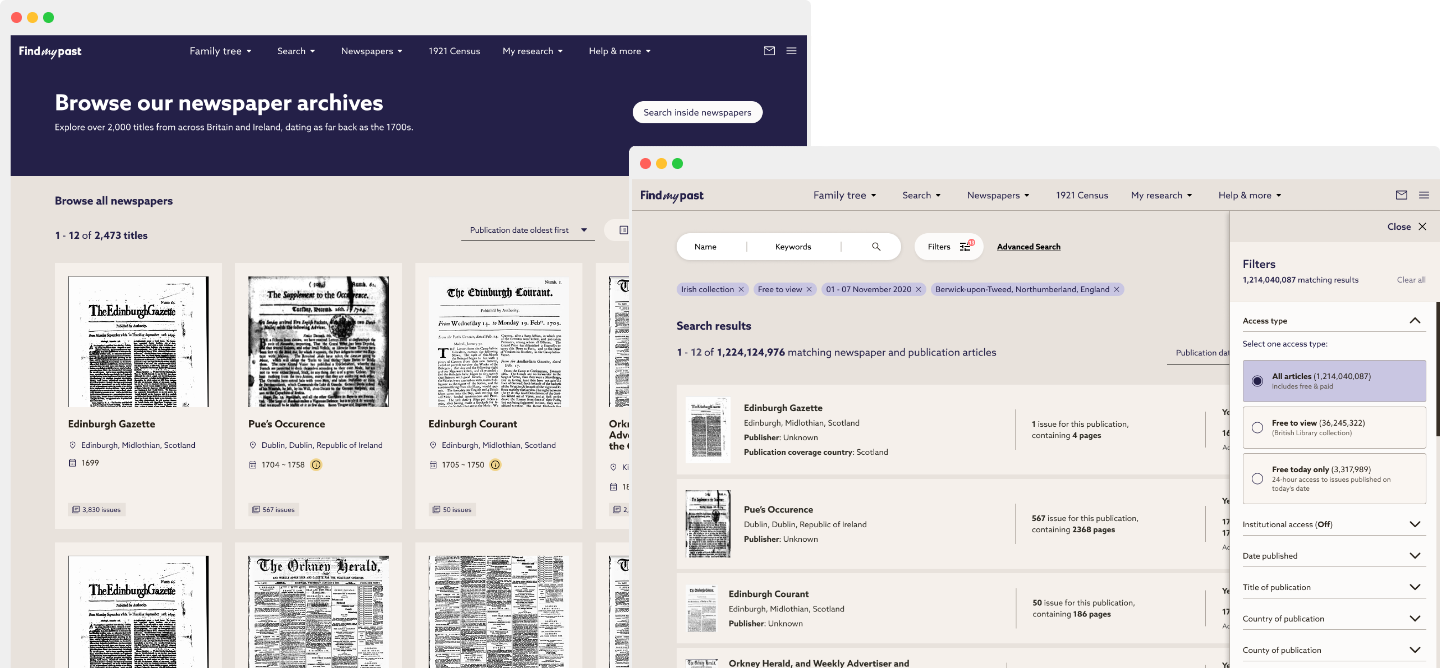
Reframed discovery as a connected system — aligning search, filtering, and browsing into a unified experience.
- Newspaper Browse — enabling structured exploration by publication and date
- Filtering System — improving clarity, flexibility, and usability of complex filters
Developed wireframes and prototypes to test and refine interaction patterns.
Scalable UX system
Developed reusable patterns applied across multiple platforms — balancing consistency with platform-specific needs.
Product optimisation process
Delivered through an iterative cycle of research, prototyping, and validation — using behavioural insights and ongoing feedback to refine the experience.

Key achievements
- Introduced a scalable filtering system to support growing datasets across platforms
- Improved clarity and usability of complex filters
- Enabled both targeted and exploratory discovery behaviours
- Established a consistent foundation for cross-platform search and browse experiences
Skills demonstrated
- Product design for complex systems
- Interaction design for data-heavy interfaces
- Search and discovery UX
- Cross-platform design thinking
- User research and behavioural analysis
- Cross-functional collaboration
Key product insights
- Users approached discovery in two ways: targeted search and open-ended exploration
- Filters were underutilised due to complexity and low visibility
- Browsing is critical when users lack precise queries
- Consistency across platforms reduces cognitive load
Involvement
Product UX/UI Design
Interaction design
UX strategy
Client
Findmypast
Platforms
Findmypast, The British Newspaper Archive, The Social History Archive
Timeline
2025 — ongoing platform improvements across search and discovery
Constraints
British Library partnership requirements Legacy systems and data structures
Credits
Martin Stocks - Principal Product Manager
Lorna Tyrtania - Principal Product Manager
Giorgia - UX researcher
Chris Hicks - Design Manager
John Lek - Principal Software Engineer
Andy Pond - Principal Software Engineer